
White-Label Travel eSIM for UK OTAs and Travel Brands
by Daniel Dib10 Sept 2026
Figures cited by KPMG's analysis of Ofcom market data show UK mobile virtual network operators added 1.5 million customers in 2024 while traditional network operators lost 54,000. UK consumers are already comfortable switching connectivity providers digitally, without a physical SIM changing hands. Most UK travel brands have not caught up: a customer books a package holiday or a flight, then leaves the app entirely to buy travel data from a third-party eSIM storefront the brand has no relationship with.
That gap costs more than a missed upsell. The travel brand loses the margin on a purchase its own customer was already going to make, loses visibility into a part of the trip that shapes how the customer experiences the destination, and still fields the support query when the third-party eSIM does not work as expected, despite earning nothing from the sale.
This article covers what a white-label travel eSIM product looks like specifically for UK OTAs, tour operators, and travel brands: where it fits in the booking journey, what changes for UK compliance, and what a realistic UK deployment looks like in pounds rather than a generic percentage.
Monty Mobile's Remote SIM Provisioning infrastructure and eSIM Consumer Platform provide the white-label infrastructure UK travel brands need to launch this under their own brand.
The Challenge: Why UK Travel Brands Are Losing This Revenue by Default, Not by Choice
Most UK travel brands are not avoiding eSIM revenue deliberately. It is simply not on the roadmap, because the default assumption is that adding connectivity means becoming a telecoms operator, negotiating carrier deals, and taking on regulatory obligations that sit well outside a travel business's core competence. That assumption is the actual barrier, not the underlying product.
A white-label model removes that barrier entirely. The infrastructure, carrier agreements, and GSMA-certified provisioning stay with the wholesale provider. The travel brand configures pricing and owns the customer-facing product, without operating anything a telecoms regulator would consider a network.
The other assumption worth challenging is that this only makes sense for large operators with dedicated product teams. The configuration work, plan catalogue setup, pricing tiers, storefront branding, sits at the platform layer a wholesale provider exposes through a portal or API. A UK travel brand with no telecoms background is not building infrastructure. It is filling in a plan catalogue and choosing a margin, which is closer to setting up a new product line in an existing e-commerce system than launching a new business.
How the White-Label Model Works
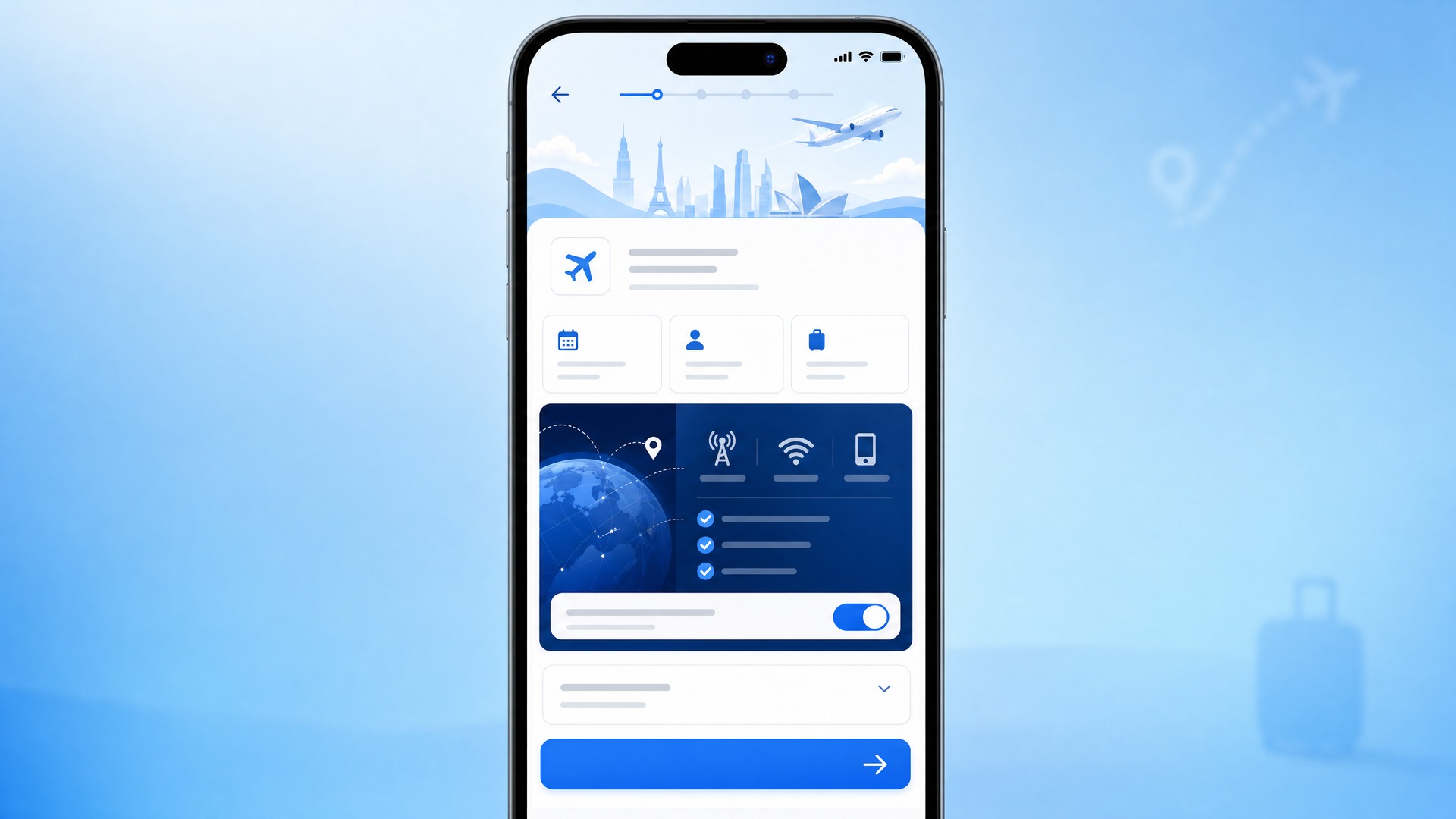
The technical architecture behind white-label travel eSIM runs on the GSMA's SGP.22 Remote SIM Provisioning specification, the same standard underlying every consumer eSIM product regardless of brand. A UK travel brand configures its plan catalogue, pricing, and branded storefront or app integration through a reseller portal or API, while the wholesale provider operates the SM-DP+ infrastructure and carrier relationships behind it. This guide focuses on how that maps to UK travel brands specifically. For the full breakdown of the platform architecture and how OTAs, digital wallets, and resellers each use it, see White Label eSIM: How OTAs, Resellers, and Digital Wallets Launch Branded Connectivity.
Package Holiday and Tour Operators: Connectivity as Part of the Package
A UK tour operator selling package holidays already bundles transfers, insurance, and excursions into the booking. Connectivity fits the same pattern: a destination-specific data plan presented as part of the package, or as a paid add-on at checkout, rather than something the traveler has to think about separately.
Bundling into the package price
Operators selling all-inclusive or fully bundled packages can fold a baseline data allowance into the headline price, using it as a differentiator against competitors who leave connectivity as the customer's problem, while offering paid upgrades for heavier data users.
Pre-departure activation reminders
A branded reminder sent a few days before departure, prompting the traveler to activate their included or purchased eSIM, drives attach rates from customers who did not engage with the offer at booking time and reduces day-one destination support queries.
Independent OTAs and Travel Aggregators: Checkout Attachment
For an independent OTA or flight aggregator without a bundled package model, the eSIM offer works as a straightforward checkout add-on, similar to seat selection or travel insurance.
Destination-matched offer at booking confirmation
The offer should present automatically for the traveler's booked destination rather than requiring a manual search, since aggregators compete on checkout speed and any added friction reduces both core booking conversion and ancillary attach rate.
Retaining the customer relationship post-booking
An OTA that keeps eSIM activation inside its own app or email flow retains a touchpoint with the customer through the trip, rather than losing that contact entirely to a third-party eSIM app the moment the booking is confirmed.
Airlines and Rail Operators: Connectivity Tied to the Journey
Transport operators, particularly airlines with international routes, have a similar opportunity at a different point in the journey: connectivity offered during check-in or immediately post-booking, tied to the destination the traveler is flying to.
See Monty Mobile's Transportation solutions for how connectivity fits alongside other transportation-specific customer engagement use cases.

Deployment Example: UK Tour Operator Launching a White-Label eSIM Add-On
A UK-based tour operator selling package holidays to Southern Europe and North Africa, processing roughly 60,000 bookings a year, wanted to add connectivity without expanding its small product team's scope into telecoms.
The operator integrated a white-label eSIM offer into its existing checkout flow using a hosted storefront embedded within the booking confirmation page, configured with destination-specific plans for its top 20 package destinations. Retail pricing was set at a margin comparable to the operator's existing ancillary product lines.
In the first two full booking seasons after launch, the eSIM add-on attached to a mid-single-digit percentage of eligible bookings, generating incremental revenue at effectively zero marginal customer acquisition cost, since the offer reached only customers who had already booked.
Note: This is an anonymized deployment scenario based on typical implementation outcomes. Specific results vary by implementation, audience quality, and market conditions.
The operator's product team, two people with no prior telecoms experience, owned the entire configuration and launch themselves through the reseller portal, without a dedicated engineering sprint. The bulk of the pre-launch work was destination and pricing decisions, not integration work, since the hosted storefront embedded into the existing checkout flow with minimal development effort.
What that looks like in pounds, illustrated
The figures below are illustrative, built on the scenario above to show the shape of the economics, not a client's actual reported numbers.
At 60,000 annual bookings and a mid-single-digit attach rate, say 5 percent for the purposes of this illustration, that is roughly 3,000 eSIM add-ons a year. At an illustrative margin of £4.50 per plan, comparable to the operator's existing ancillary product lines, that works out to approximately £13,500 in incremental annual margin, generated from customers who had already completed their core booking, with no additional acquisition cost attached to that revenue. A tour operator modeling this for its own business should substitute its actual booking volume, a conservative attach-rate estimate, and its own typical ancillary margin rather than treating these illustrative figures as a benchmark.
Compliance Requirements for White-Label eSIM in the UK
Disclaimer: the compliance summary above is general guidance, not legal advice. Obligations depend on the specific service model and customer base; confirm current requirements with UK counsel before launch.
See Ofcom's own announcement on the handset-locking ban, the ICO's guide to controllers and processors, Section 45 of the Consumer Rights Act 2015, and Regulation 37 of the Consumer Contracts Regulations 2013.
Getting Started: White-Label Travel eSIM for UK Travel Brands
1. Coverage and plan configuration. Configure plans against your actual top destinations, not a generic global catalogue, based on where your customers are actually booking to.
2. Integration model selection. Choose between a hosted storefront embedded at checkout, a full API integration, or a native app experience, based on your engineering capacity and how tightly you want the offer woven into your existing booking flow.
3. Pricing and margin setup. Set retail pricing consistent with your existing ancillary product margins, and decide whether connectivity is bundled into package pricing or sold as a separate add-on.
4. Launch and activation support. Launch against a limited destination set first, and put a pre-departure activation reminder in place before expanding the plan catalogue further.
Contact Monty Mobile's partner team to request a white-label demo and a coverage assessment for your top UK travel destinations.

About the Author
Daniel Dib is Senior Brand Manager at Monty Mobile, a global telecom solutions provider with 25+ years of MNO relationships across 200+ countries. He leads go-to-market strategy and content across Monty Mobile's CPaaS, A2P Wholesale SMS, and Travel eSIM product lines.
Frequently Asked Questions
What is white-label travel eSIM?
White-label travel eSIM is connectivity infrastructure operated by a wholesale provider that a travel brand sells entirely under its own brand. The customer never sees the underlying provider. The travel brand controls pricing, presentation, and the customer relationship, while the provider handles network coverage and provisioning.
How is this different from just linking to a third-party eSIM app?
An affiliate link sends the customer to a different brand's storefront to complete the purchase, earning the travel brand a small commission at best and handing the customer relationship to someone else at exactly the moment of highest engagement. White-label eSIM keeps the entire transaction, from purchase through activation, inside the travel brand's own app or website.
Do UK travel brands need a telecoms license to sell white-label eSIM?
No. The licensed entity is the wholesale infrastructure provider. A travel brand reselling under a white-label agreement is not operating a network and does not need its own telecoms license in the UK, though it should confirm this with its own legal counsel given the specifics of its business structure.
What happens if a customer's eSIM does not work at their destination?
UK consumers have statutory rights under the Consumer Rights Act 2015 covering digital content that fails to meet contractual standards, including rights to repair, price reduction, or refund. Travel brands should build a clear support and refund process for the eSIM product rather than treating it as a no-support add-on.
Can a customer cancel and get a refund after their eSIM profile has been downloaded?
Generally no. Under the Consumer Contracts Regulations 2013, a UK consumer's 14-day right to cancel a digital content purchase ends once download begins, provided the consumer gave express consent and acknowledged losing that right beforehand. This makes the express-consent step in checkout a genuine legal safeguard, not just a formality.
This article reflects KPMG's analysis of Ofcom Q1 2025 market data, GSMA SGP.22, and UK consumer and data protection law as of mid-2026. Recommended review trigger: updated Ofcom or ICO guidance, KPMG or Ofcom market data updates, or an SGP.22 revision.