
Banking Digital Transformation: Why Banks Are Becoming Travel Platforms
by Monty Holding Staff9 Oct 2026
Every frequent traveler knows the routine. The plane lands, the seatbelt sign goes off, and the first task is getting the phone back online. Roaming or no roaming. Airport Wi-Fi or a queue at a SIM kiosk. The card in their wallet, meanwhile, works at the first coffee counter without a second thought.
That contrast captures where banking digital transformation is heading next. The bank travels with its customer from the moment the flight is booked to the last taxi home. It knows where they are going, how long they are staying and roughly how they like to travel. Yet in most cases, the bank's role ends at the payment.
For more than a decade, going digital meant moving the branch onto a phone: faster transfers, sharper apps, shorter queues. That work mattered, but most of it is done, and it left many banks with polished apps that customers open for a few seconds at a time. The next phase turns on a different question. Not how a bank delivers financial products, but what else customers can rely on it for.
Travel is where that question is being answered first.
Banks that treat it as a sideline will keep processing the payments, but banks that treat it as a relationship will own the trip.
Why Banking Digital Transformation Has Hit a Ceiling
The uncomfortable truth for many retail banks is that their core products have become interchangeable.
A current account, a credit card, a savings rate: customers can compare them in minutes and switch in an afternoon, and more of them are doing exactly that.
The Accenture Global Banking Consumer Study 2025, which surveyed more than 49,000 customers across 39 countries, found that 73% engage with multiple banks beyond their main one, and 58% bought a financial product or service from a new provider in the previous 12 months.
Those numbers describe a relationship that is quietly thinning. The main bank is still the main bank on paper, but it now shares the customer's attention, and their wallet, with a growing list of alternatives.
The competition is also getting stronger. McKinsey's Global Banking Annual Review 2026 found that among the world's 1,000 largest banks and 1,000 largest fintechs, the fintechs' share of combined revenue climbed from 10% in 2021 to 17% in 2025. The report argues that banks now need a "distinctive beyond-banking value proposition," delivered at close to zero additional cost to acquire and serve customers.
That is the ceiling most digital banking trends have run into. Better apps made banking faster, simpler and always within reach, but they did not give customers a reason to care which bank they use.
When every bank can match every feature, relevance has to come from somewhere other than the product sheet.
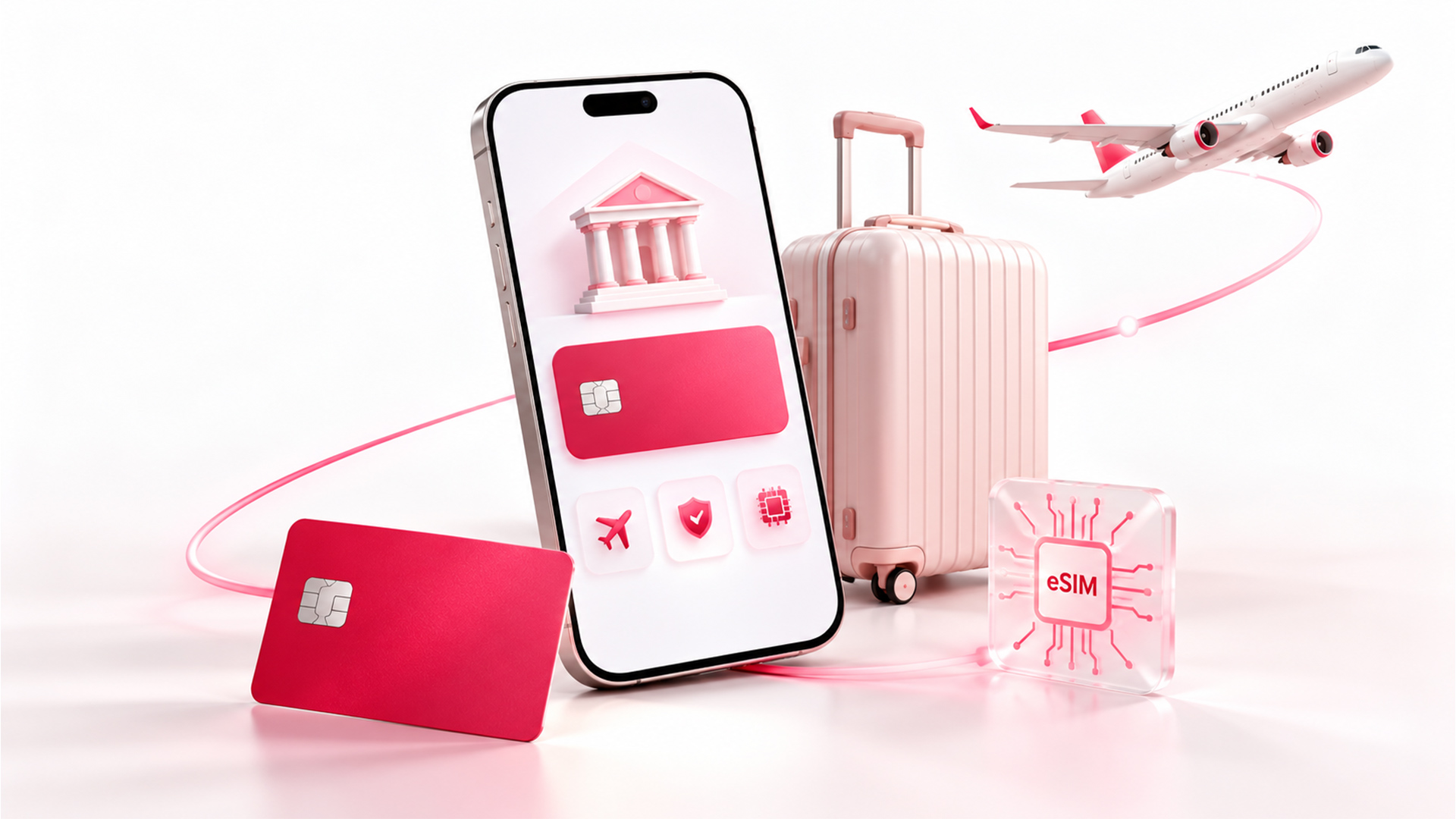
Banks Have Been in the Travel Business for Decades
None of this is entirely new territory. Banks began drifting into travel long before anyone called it a lifestyle strategy.
Airline miles turned credit cards into a way to fly, lounge access turned a card into a status symbol, travel insurance and fee-free foreign spending followed, until the premium travel card became one of the most competitive products in retail banking.
Not one of those benefits came from banking. Each was pulled in from another industry, and each made the card harder to walk away from.
The lesson was simple. A customer who books every flight on a card, collects the points and waits for boarding in the lounge does not think of that card as a financial product. It becomes part of how they travel. The benefit carries the relationship, and the bank captures the spending that follows.
Now watch what is happening to the rest of the trip.
Embedded Finance: The Same Convergence, in Reverse
While banks have been adding lifestyle services, the rest of the economy has been adding banking. That is embedded finance: payments, lending, insurance and even accounts built directly into non-financial platforms.
Retailers offer installment plans at checkout, ride-hailing apps run their own wallets, and travel booking sites sell insurance and let customers pay for the holiday later. Juniper Research forecasts that embedded finance revenue will reach $617 billion globally by 2031, up from $162.6 billion in 2026.
Put the two movements side by side and they mirror each other. Non-financial platforms are embedding finance to deepen their customer relationships and banks are embedding non-financial services for exactly the same reason.
Both are chasing the same prize: the everyday moment when a customer needs something and opens one app instead of another.
McKinsey's 2026 review names embedded finance and ecosystem platforms among the strategic innovations banks should build in faster, partnership-led units outside their core business.
The logic works in both directions. If a travel platform can become a little bit of a bank, a bank can become a little bit of a travel company, and it starts with a far clearer picture of how its customers actually travel.

The Moment the Plane Lands
Travel volumes give this convergence its urgency. UN Tourism estimates that 1.52 billion international tourists traveled in 2025, almost 60 million more than the year before. Every one of those trips depends on two things working from the first minute: a way to pay and a way to stay connected.
The second is where the experience still breaks.
Maps, ride-hailing, boarding passes, hotel confirmations and even the bank's own app all need a connection. Travelers on roaming often ration their data or dread the bill, others hunt for airport Wi-Fi or queue for a local SIM. The card works everywhere, instantly. The phone often doesn't.
Travelers are already solving this on their own. Juniper Research forecast that revenue from travel eSIM packages would reach $1.8 billion by the end of 2025, up 85% from $989 million in 2024, as more travelers turn to eSIMs as a more affordable alternative to roaming.
The habit is forming quickly, what remains undecided is whose app the traveler buys it from.
For banking customer engagement, few moments carry more weight than the first hour in a new country. The customer is slightly anxious, spending is about to begin, and the brand that makes everything work tends to be remembered.
Travel eSIM, offered as a card benefit or an in-app purchase, puts the bank at the center of that moment. What's missing is a bank prepared to claim it.
Why Banks Are the Natural Owner of the Trip
Banks hold advantages here that most travel brands would envy. Their customers are already verified, their apps are already installed, and payment details are already on file, so a data plan can be bought in two taps with no new account and no new checkout. Through card and currency activity, banks often see travel intent before the traveler has packed a bag.
Trust matters too. Handing a phone's connectivity to an unfamiliar brand at the airport feels like a risk. Receiving it from the bank that already safeguards the customer's money feels like a service
The commercial logic compounds from there. A customer who stays connected abroad keeps using the bank's app, sees its exchange rates, taps its card and comes home with a better memory of the trip. Connectivity becomes a daily reason to open the app while traveling, and a quiet argument against moving the travel budget to another provider.
This is the handover the Monty eSIM Hub is designed to enable, giving banks a way to add travel connectivity to their cards and apps under their own brand. Most banks already know when their customers are traveling. What they have lacked is a way to act on that knowledge at the moment it matters. When connectivity comes from the bank, the first thing that works in a new country is the bank's own app, and that is the kind of experience customers remember long after the trip is over.
Banking as a Service, Now Running in Both Directions
Here is where many banking teams assume the complexity begins. Mobile connectivity sounds like telecom territory: operator agreements, coverage in dozens of countries, eSIM provisioning and support for every handset. Few banks want to become a mobile operator, and none of them need to.
The model will feel familiar to anyone who has watched banking as a service mature. Under that model, a licensed bank provides the regulated infrastructure, and a brand outside financial services offers accounts or cards to its own customers under its own name.
The partner owns the experience; the bank runs the plumbing.
Travel connectivity now works the same way, only in reverse. Juniper Research's travel eSIM study found that connectivity-as-a-service platforms have lowered the barriers to launching travel eSIM offerings. The connectivity partner handles coverage, operator relationships and provisioning, while the bank decides how the benefit looks and who receives it.
That is the white label eSIM model, delivered inside the bank's own app through travel eSIM infrastructure built for exactly this purpose.
In practice, the options are flexible. A premium card tier might include a data allowance on every trip abroad. A mass-market app might sell country or regional data packs alongside travel insurance and currency exchange. Loyalty points could be redeemed for data. The bank designs the proposition and keeps the relationship. The hard part is already done.
The Next Chapter of Banking Digital Transformation
Industries rarely announce their turning points. Nobody declared the moment the travel credit card became a banking battleground; it simply happened, and the banks that moved early built franchises that others spent years trying to match.
Travel connectivity is at that earlier stage now.
Travelers have already shown they will move away from roaming, and the infrastructure to serve them is in place. What has not been settled is which brands will become the default way people stay connected abroad.
Banks enter that race with trust, data and an app that is already on the phone.
The next chapter of banking digital transformation will not be written in the product catalog. It will be written in the moments customers remember, and few are more memorable than landing somewhere new and finding that everything simply works.
The banks that deliver that moment will no longer sit behind the journey. They will be part of it

About Monty Mobile
As a global telecom technology enabler, Monty Mobile sits at the intersection of connectivity, intelligence, and innovation, partnering with mobile operators, enterprises, and hyperscalers to protect revenues, unlock growth, and accelerate digital transformation.
Our integrated solutions span A2P SMS and international voice monetization, AI-powered anti-fraud, CPaaS, eSIM, fintech, operator management, and advanced analytics, equipping operators and enterprises with the tools to compete, scale, and lead in an evolving digital landscape.
Trusted by over 2,000 partners; including operators such as Vodafone, Orange, Etisalat, and China Mobile, and technology platforms including Meta, Apple, Google, and TikTok. Monty Mobile delivers proven performance across over 200 countries, reaching over 1.8 billion mobile subscribers worldwide.
Headquartered in London, with 15 regional offices across Africa, Asia, Europe, and the Middle East, we combine global scale with local proximity to deliver solutions that are fast, resilient, and built for the long term.
For more information, visit www.montymobile.com and connect with us on LinkedIn.
About Monty eSIM
Monty eSIM is a global connectivity enabler for consumers, operators, and enterprises. It offers a travel eSIM application for end users alongside the Monty eSIM Hub, a wholesale platform that enables operators, enterprises, and digital platforms to launch and scale connectivity services. Active across 200+ countries and regions, Monty eSIM simplifies how connectivity is delivered and scaled through capabilities such as a single global eSIM, multi-IMSI, intelligent routing, and always-on connectivity.
Frequently Asked Questions
What is banking digital transformation?
Banking digital transformation is the shift from branch-based, product-led banking to digital services built around how customers actually live. Its first phase focused on mobile apps, online onboarding and faster payments. The current phase is about relevance: using data, partnerships and new services to become part of customers' everyday decisions, including travel, rather than simply processing their transactions.
What is the difference between embedded finance and banking as a service?
Embedded finance describes the customer-facing result: financial products such as payments, lending or insurance offered inside a non-financial brand's app or checkout. Banking as a service is the infrastructure that often makes this possible, with a licensed bank providing regulated services that another company delivers under its own brand. Put simply, banking as a service is the engine and embedded finance is the experience. Both reflect the same shift toward services that appear wherever the customer already is.
How can banks improve customer engagement beyond financial products?
Banks can offer services tied to real moments in customers' lives, such as travel, moving home or major purchases, delivered inside the banking app or as card benefits. Travel is a natural starting point because banks already see card and currency activity abroad. Benefits such as travel insurance, lounge access and mobile data give customers a reason to open the app more often and keep their travel spending with the same provider.
How can a bank offer travel eSIM to its customers?
Most banks partner with a connectivity provider rather than building mobile infrastructure themselves. Under a white label model, the provider manages coverage, operator agreements and eSIM provisioning, while the bank integrates data plans into its app through an API and sets its own branding and pricing. Plans can be sold as in-app purchases, bundled into premium card tiers or offered as loyalty rewards.
Let's Talk Partnerships
Banks and financial institutions exploring travel connectivity as a card or app benefit can speak with the Monty Mobile team at montymobile.com/contact-us or email sales@montymobile.com.